When parents first hear “occupational therapy” for their child, the word “occupational” can be confusing. Adults associate it with work and jobs. But for children, the “occupations” occupational therapy focuses on are the everyday activities that define their daily life: going to school, playing, eating, dressing, and participating in the world around them.
This post gives parents a practical introduction to what occupational therapy is, what OTs work on with children, and what the process looks like.
What Is Occupational Therapy?
Occupational therapy (OT) is a licensed health profession that helps people participate in the everyday activities — or “occupations” — that are meaningful to them. For children, this means supporting their ability to engage in school tasks, self-care routines, play, and social participation.
OTs work with the whole child: the physical skills needed for a task, the sensory systems involved in engaging with the environment, and the cognitive and behavioral strategies that support independent functioning.
In Florida, occupational therapists must hold a license issued by the Florida Board of Occupational Therapy, part of the Florida Department of Health. Licensees renew biennially. At Speech and Language Connection Services, our OT staff maintains current Florida licensure, and credentials are available upon request.
Three Core Areas OT Addresses in Children
The three focus areas on our flyer — fine motor skills, sensory supports, and daily living skills — represent the three domains where OT most commonly makes a difference for children we work with.
1. Fine Motor Skills and Hand Function
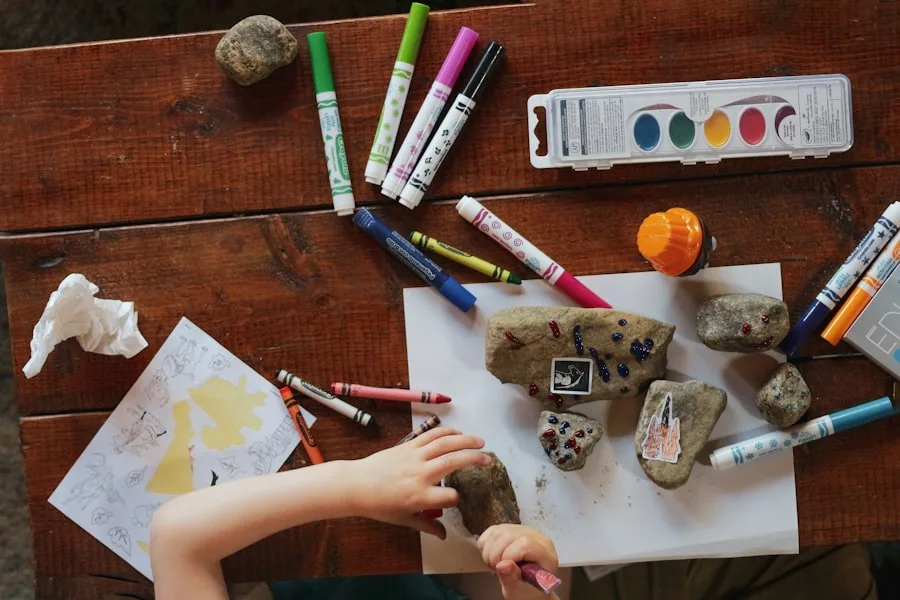
Fine motor skills are the small, precise movements that involve the hands and fingers. These skills are fundamental to school participation and many tasks children are expected to do independently.
Fine motor targets in OT often include:
- Handwriting — pencil grip, letter formation, writing endurance, and legibility
- Cutting with scissors — a task that requires coordination between both hands and visual guidance
- Using utensils — fork, spoon, and knife use; relevant for both mealtime and school lunch
- Manipulating small objects — zipping a backpack, buttoning a shirt, managing clasps and snaps
- Assembly and construction tasks — building with manipulatives, completing puzzles, managing school materials
A child who avoids writing tasks, gets fatigued quickly during tabletop work, or seems to struggle disproportionately with handwriting compared to other skills may have fine motor needs that OT can address directly.
Fine motor therapy is hands-on and specific. OTs assess where in the movement chain the difficulty lies — is it strength, coordination, motor planning, grip mechanics, or visual-motor integration? — and target the underlying skill.
2. Sensory Processing Supports
Every child processes sensory information differently — how they register touch, sound, movement, visual input, and more. For some children, sensory processing differences create significant challenges: they may be easily overwhelmed in busy environments, seek constant movement to feel regulated, be highly sensitive to clothing textures or certain foods, or struggle to calm down after transitions.
OTs address sensory processing from a participation lens: the goal is not to change how a child’s nervous system works, but to help the child function more effectively in their daily environments despite those differences.
This might look like:
- Building strategies for transitions and changes in routine
- Identifying environmental modifications that reduce sensory overload at school
- Developing self-regulation routines that help the child return to a ready-to-learn state
- Practicing activities that build tolerance and adaptive responses over time
When describing sensory-based OT to families, we’re careful about language: OTs can address sensory processing as it relates to participation and engagement. We describe what we observe and what we target functionally, rather than attaching diagnostic labels. If you’re looking for an evaluation and diagnosis of a sensory processing condition, that involves a separate clinical assessment pathway.
3. Daily Living Skills
Daily living skills — often called “activities of daily living” or ADLs — are the routines of everyday life: dressing, grooming, toileting, eating, managing a school bag, organizing materials.
For children who are developing more slowly in these areas, or who have physical, sensory, or cognitive differences that make these tasks harder, OT provides structured intervention to build independence step by step.
This work is highly practical. It might involve breaking a task like putting on a shirt into its component steps and teaching each step systematically, or finding adaptive tools and strategies that help a child succeed with less frustration.
Independence in daily living skills matters beyond convenience. Children who struggle with self-care often experience frustration, avoidance, and reduced confidence — impacts that ripple into school, social relationships, and family life.
What Does an OT Session Look Like?
For children, OT sessions often look like play. That’s intentional — children learn best through play, and skilled OTs design activities that target specific skills within engaging, motivating contexts.
A session might include:
- Tabletop activities targeting pencil control or hand strengthening
- Obstacle courses or movement breaks that address motor planning and sensory regulation
- ADL practice in naturalistic simulation
- Structured games that build specific cognitive-motor skills
- Strategy teaching for school tasks
Every child has an individualized plan with specific, measurable goals. The OT tracks data on progress and adjusts the approach based on what the child is and isn’t responding to.
Families are a critical part of the process. OTs work best when parents understand the goals and can incorporate strategies into daily routines at home — because daily practice in natural environments is where skills generalize.
How OT and Speech Therapy Often Work Together
Many children receive both speech therapy and occupational therapy simultaneously, and there’s good reason for that. Communication difficulties and motor/sensory differences often co-occur, and addressing both sides of a child’s profile together tends to produce better outcomes than addressing either in isolation.
At Speech and Language Connection Services, our speech and OT services are coordinated — we’re not separate providers operating in silos. That means your child’s team can communicate and align their approaches in a way that supports the whole child.
Is OT Right for My Child?
Here are some situations where an OT evaluation is often worth pursuing:
- Writing is significantly harder than expected for your child’s age
- Your child is much slower or more frustrated with self-care tasks than peers
- Sensory sensitivities are interfering with daily functioning, school participation, or family life
- Your child is receiving special education services that include OT-related goals
- A teacher or pediatrician has recommended an OT evaluation
- Your child avoids fine motor tasks or shows significant distress around them
An evaluation will give you a clear picture of where your child is relative to developmental expectations, and a specific plan for what to address.
Our Occupational Therapy Program
Occupational therapy at Speech and Language Connection Services is available to support your child’s development and daily skills. We accept medical insurance, including Medicaid, CMS and Sunshine. We also accept the Step Up for Students FES-UA program for families who are using this scholarship.
All services are provided in person at our Hialeah Gardens location.